


 Netherlands
 Sweden
 UK
UK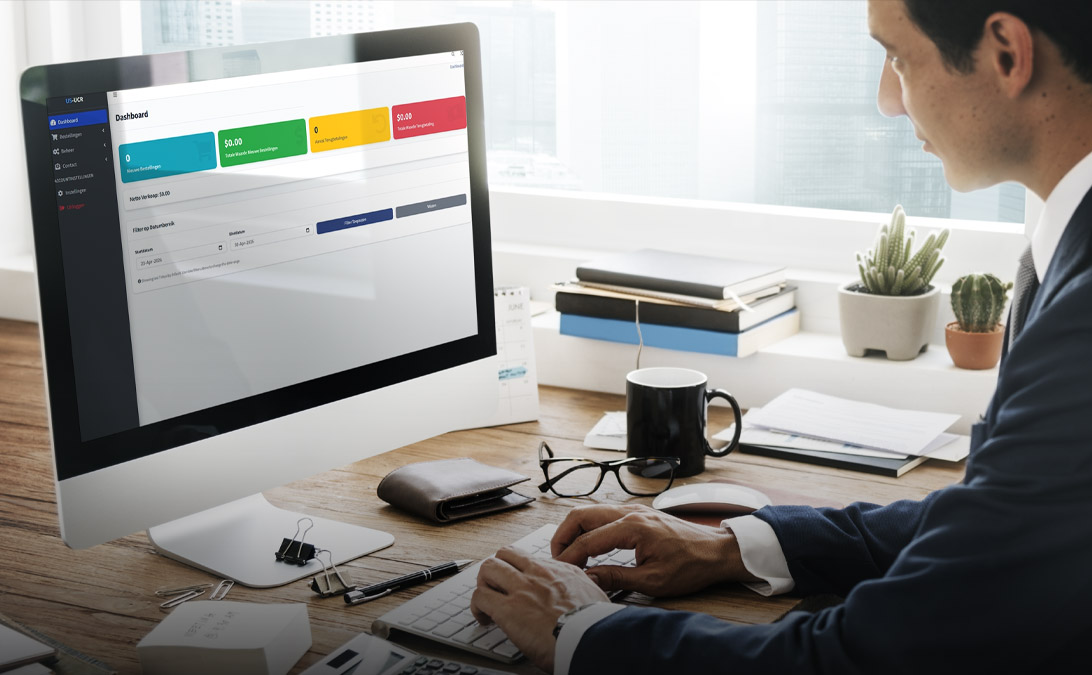
Filing Portal supports transportation carriers with Unified Carrier Registration (UCR). For their users, this isn’t optional work. It’s something that has to get done every year, without delays.
Over time, the platform started to feel the pressure.
More applications were coming in. More data needed to be handled. And while the system was still working, it was becoming harder to manage things efficiently. Small gaps in the process started to show up more often.
That’s when the client approached Zedrox.
As the platform evolved, it started to reflect the kind of structured approach businesses look for when they have a web app made to handle process-driven workflows.
Where things were slowing down
At a glance, nothing looked completely broken. Users could still submit applications. Admins could still process them. But if you looked closer, the effort behind it was increasing.
Forms required more manual input than they should. Errors were common, especially with repeated data entry. On the admin side, tracking orders, updating statuses, or handling refunds wasn’t as smooth as it needed to be.
It wasn’t one big problem. It was a collection of small inefficiencies building up over time.
And that’s usually what slows systems down.
Zedrox’s approach: fix the core
The first decision was simple but important. Don’t change the front end. Users were already familiar with how the platform looked. Changing that would only create friction. Instead, Zedrox focused on what sits underneath, the backend and the overall structure.
The platform was rebuilt using Laravel, not just to modernise it, but to organise it properly. The earlier setup worked, but it didn’t have the structure needed for scale. This rebuild changed that.
At the same time, Zedrox reviewed how users move through the application process. Not redesigning it completely, just making it clearer and more predictable.
Making the application flow easier to complete
One area that needed immediate attention was the application journey. Earlier, users had to move through forms without a clear sense of progression. It worked, but it wasn’t smooth. That often led to incomplete submissions or small mistakes.
Zedrox simplified this into a step-by-step flow.
Users now enter their details, select business type and fleet size, review pricing, and then move to payment. Each step follows naturally from the previous one.
To reduce manual effort, integrations were added. USDOT lookup helps fetch company details, and postcode-based autofill reduces the need to enter address information again. These are small changes, but they make a noticeable difference when you deal with volume.
Around this stage, the platform started to reflect what a structured software company would typically aim for, like clarity in flow, reduced friction, and better handling of scale.
Giving admins better control
On the admin side, the changes were more structural. Earlier, information was available, but not always easy to work with. Tasks like updating order status or managing refunds took more steps than they should.
Zedrox built a central admin panel where everything comes together.
Applications, payments, and statuses all in one place. Admins can filter, search, and update records without jumping between systems. Refunds and cancellations are handled within the same flow, which keeps things consistent.
A simple dashboard was also added. It shows key numbers like orders, refunds, and total value. Not overloaded, just enough to give a clear picture of what’s going on.
Reducing back-and-forth
Another thing that came up early was communication. A lot of updates were being handled manually. That takes time, and it’s easy for things to get missed.
Zedrox addressed this by setting up automated notifications. When an application is submitted, updated, or refunded, both the user and the admin are informed.
It’s a small shift, but it removes a lot of repeated effort. Payments were also streamlined through Stripe. The idea wasn’t to add anything complex, just to make sure users can complete the process without confusion or trust issues.
Built to handle what comes next
One of the reasons the client approached Zedrox was not just the current issues, but what would happen as the platform grows further. The earlier system made even small changes feel heavier than they should be. That usually leads to delays or temporary fixes.
The new setup is different.
With a cleaner structure, the platform can now handle additional features, integrations, or workflow changes without needing another rebuild. This is where custom software development becomes important, building systems that fit the business and can evolve with it.
What changed, practically
The platform still looks familiar. That part hasn’t changed much. But how it works has.
Applications move faster. Data is more consistent. Admins have better control without extra steps. And the system can now handle growth without slowing down.
Zedrox didn’t try to turn this into something completely new. The focus was on making what already exists work better, especially at scale.
And in this case, that’s what made the difference.